

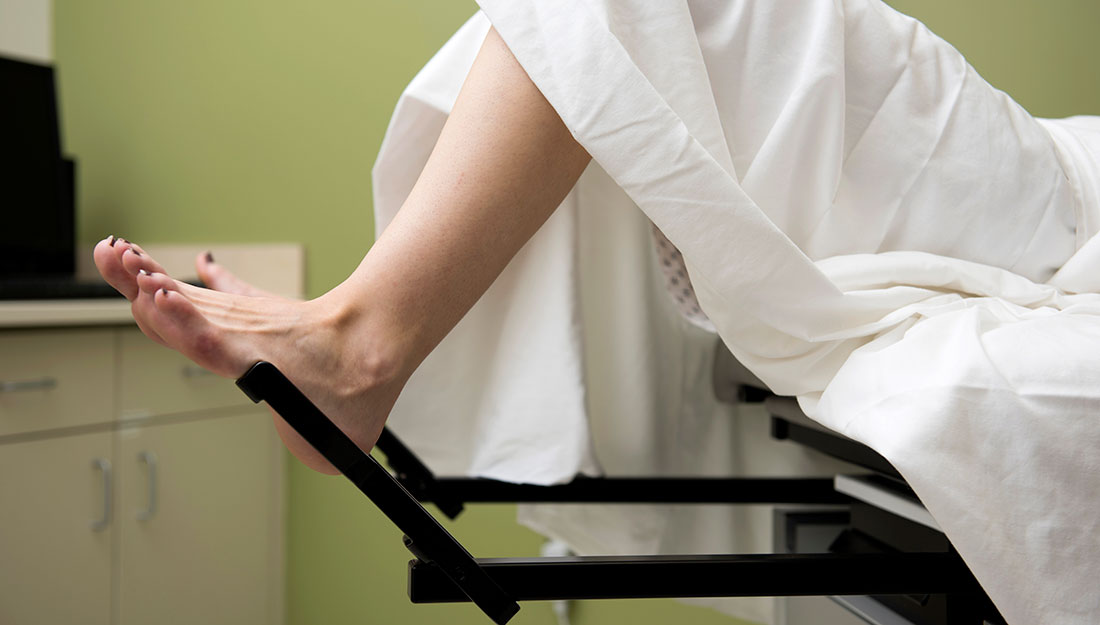
Cultivating a good relationship with your gynecologist is important. Too often, women in paper gowns are overly anxious about their first visit or are afraid to share intimate details with their OB/GYN about troubling symptoms. A Texas A&M Health Science Center women’s health expert explains what she wants her patients to know before their next appointment.
Don’t sweat your first pelvic exam
We’ve all heard the stories. My first annual was a nightmare. It hurt so badly. I swear, I’m never going back there again.
The first annual exam is usually the most intimidating visit for young women, and they often approach it too tentatively. “Your first exam will never be as bad as you imagine it to be,” said Patricia Sulak, M.D., a board certified OB/GYN and professor at the Texas A&M College of Medicine. “The speculum we normally use for this exam is about the size of a tampon. It may not be the most pleasant experience in your life, but most of my patients always leave with the perspective that it wasn’t as terrible as they envisioned.”
Go with the flow?
Your annual exam is typically scheduled months in advance, but as the date nears, mother nature could too. So, should you keep your scheduled appointment and visit your gynecologist during your menstrual cycle? Sulak said this should be a conversation between you and your OB/GYN.
“The absence of blood does make the Pap smear easier to interpret and more accurate,” she said. “On the flip side, it’s often difficult to schedule an appointment months in advance around the time of an expected period. Gynecologists are accustomed to having to examine patients when they are experiencing heavy bleeding. If you need to be seen, we don’t care if you are bleeding or not. I would advise patients to consult with their doctor if their time of month hits around appointment time.”
Gynecologists don’t care about your appearance ‘down there’
According to Sulak, today women are being told to do a lot of things with their bodies that aren’t really necessary.
“One practice women can avoid is douching, whether it’s before an appointment, or in general,” she said. “There is much evidence that suggests douching can increase your risk for pelvic infections and will also alter your vaginal bacteria. Unless a physician has specifically recommended it for you, it’s not needed.”
Sulak added that shaving and waxing your pubic area is also completely unnecessary. “It’s commonplace for women to shave their pubic hair, but there really is no hygienic reason to do this,” she said. “Shaving and waxing your genitals can easily cause infections and irritate your hair follicles.”
That scented bubble bath you just bought may smell heavenly—but chances are—it’s probably causing problems. Sulak noted that scented gels are irritating to your sensitive vaginal region. “I would advise women to refrain from using scented or perfumed bath products when bathing,” she said. “You should be using the mildest soap possible to prevent skin irritation.”
The myth of the annual (and why you should still go)
Worth noting, it’s true that you don’t necessarily need an annual exam every year, but, that doesn’t mean you should dodge your OB/GYN. “Now, pap smears are done every three years, and while you may not need to be seen annually, you do need to be seen occasionally,” Sulak said. The Centers for Disease Control and Prevention recommends sexually active women under the age of 25 be tested annually for sexually transmitted diseases. This is particularly important if you have a new sexual partner.”
“What’s important is many women come in for their annual exam and I diagnose other health problems like high blood pressure or emotional problems. It’s often not about a pelvic exam, but about preventing and treating other health issues in their life,” she said.
Speak up and often
Certain gynecological disorders can present in many ways and Sulak emphasized patients shouldn’t be afraid to be frank about abnormal symptoms. “If you’re experiencing heavy periods, premenstrual syndrome (PMS), depression, cramps or other worrisome symptoms, we need to know these things,” she said. “I can’t treat a problem I don’t know about. I want my patients to understand they are investing in wellness. Preventative measures are always better than reactive ones.”
Invest in yourself by living well aware
When asked what was the most important piece of advice she could give her patients, Sulak stressed she wants more women to adopt healthy lifestyles and live well-aware.
“I wish the majority of patients would invest in healthy living practices so they’re able to rely less on us,” she said. “I’ve been practicing medicine for 35 years and the skyrocketing obesity rate is extremely troubling. Two out of three patients I see are overweight, and one out of three are obese. More and more women are buying into the culture of unhealthy eating and it’s costing us with an increased rate of obesity, diabetes and other problems.”
